Federal accessibility mandates and Tennessee building regulations require dedicated sanitation accessibility on commercial builds, public gatherings, and infrastructure overhauls. An ADA accessible portable toilet…
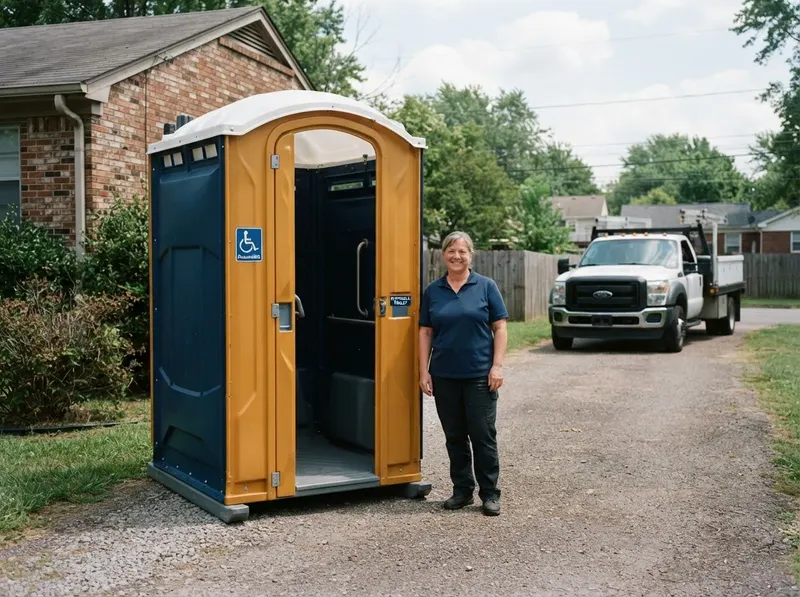
Federal accessibility mandates and Tennessee building regulations require dedicated sanitation accessibility on commercial builds, public gatherings, and infrastructure overhauls. An ADA accessible portable toilet differs fundamentally from standard construction units: it eliminates the raised step threshold entirely, providing a zero-clearance, roll-in entry flap that accommodates manual wheelchairs, electric mobility chairs, and individuals with limited physical mobility. The interior offers a full 360-degree, 60-inch turning radius, reinforced horizontal side and rear grab bars mounted at 33 to 36 inches above the floor, and an accessible seat height between 17 and 19 inches. This engineering prevents the logistical vulnerability of turning away site visitors or incurring fines during Metro Nashville Department of Codes and Building Safety inspections.
Selecting an accessible unit requires balancing real estate footprints against compliance needs. A standard chemical toilet occupies a 44-inch by 48-inch footprint, which makes it ideal for tight alley builds in Germantown, 12 South, or The Gulch where space is constrained. By contrast, an ADA-compliant unit requires an 85-inch by 85-inch footprint plus a clear, level approach path. For outdoor festivals at Centennial Park, construction projects along Donelson Pike, or weekend gatherings near the Grand Ole Opry, opting for a regular unit to save footprint space creates non-compliance risks and legal exposure. Event organizers often run an optimal ratio of one ADA unit for every ten standard portable restrooms, ensuring full universal access across the site.
Site conditions dictate accessibility. In sloping terrains across Bellevue, rolling hills in Green Hills, or unpaved staging zones along Shelby Bottoms Greenway in East Nashville, drivers must position the cabin on flat, packed terrain to keep the zero-grade entry ramp truly flush. The delivery protocol involves three steps: first, logistics routes the truck via major Nashville arteries like I-40, I-65, or Briley Parkway directly to the staging footprint; second, the driver rolls the 250-pound empty polyethylene cabin off the tilt-bed trailer, stabilizes it on level ground, and checks latch tension; third, technicians execute weekly scheduled vacuum evacuations, power washing, and restocking, ensuring clear invoicing without unexpected environmental dumping surcharges.
Every job gets a firm, written price after a free on-site visit.
Tell us about your ada accessible portable toilet job in Nashville and we'll send a clear, written quote, usually the same day.
 Canyon Hawk Portable Toilets