General contractors managing multi-story developments in The Gulch or historic restorations along 5th Avenue North in Germantown require rugged sanitation assets that stand up to daily framing, masonry, and dry-in…
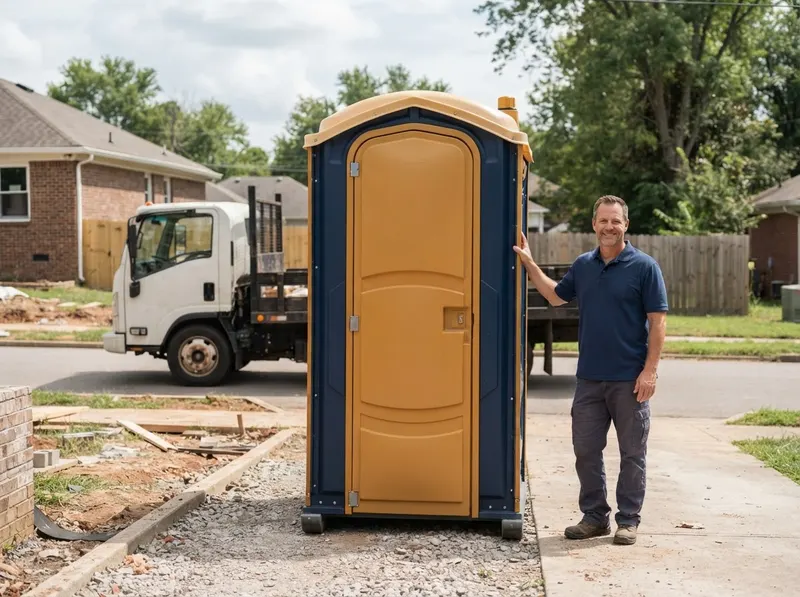
General contractors managing multi-story developments in The Gulch or historic restorations along 5th Avenue North in Germantown require rugged sanitation assets that stand up to daily framing, masonry, and dry-in crews. OSHA standard 29 CFR 1926.51(c)(2) mandates one functional toilet facility for every 20 workers on an active jobsite working an eight-hour shift. If a framing crew grows beyond 20 laborers across a multi-trade remodel in Green Hills or Bellevue, placement must scale up by additional units to avert site downtime or municipal inspection citations. The standard construction porta potty features an impact-resistant, ventilated 44-inch by 48-inch footprint equipped with a 60-gallon holding tank that withstands wind gusts and structural dust without tipping or cracking.
Selecting a standard construction unit prioritizes chemical durability, structural footprint, and rough-trade utility over delicate cosmetic fixtures. While temporary event restrooms include foot-pump sinks and illuminated mirrors, the standard construction porta potty provides high-capacity endurance: an open-grid ventilation screen to expel thermal buildup under Tennessee summer heat, a steel-reinforced hasp for padlock security outside working hours, and heavy-duty interior grab latches. The operational trade-off is interior aesthetic versus site survivability: hand-wash trailers require continuous municipal water hookups that undeveloped parcels in Donelson or Antioch lack, whereas self-contained chemical construction toilets operate entirely off-grid without utility lines.
Site positioning across Davidson County demands level, dry soil or compacted gravel accessible within 25 feet for our commercial vacuum service trucks. In high-density corridors like 12 South, East Nashville, and Sylvan Park, where curb space competes with dumpsters and material drops, placement requires clear vertical clearance free from low-hanging utility branches and electrical feeds. Scheduled routes occur weekly: technicians evacuate the 60-gallon tank through an airtight 2-inch suction hose, recharge the reservoir with 5 gallons of biocidal odor-neutralizing solution, sanitize high-contact handles and seats with hospital-grade disinfectant, and restock commercial two-ply paper rolls.
Every job gets a firm, written price after a free on-site visit.
Tell us about your standard construction porta potty job in Nashville and we'll send a clear, written quote, usually the same day.
 Canyon Hawk Portable Toilets