A holding tank sanitation system handles volume beyond the limits of standard self-contained portable toilets by capturing effluent from mobile office trailers, mobile command centers, and temporary kitchen blocks. For…
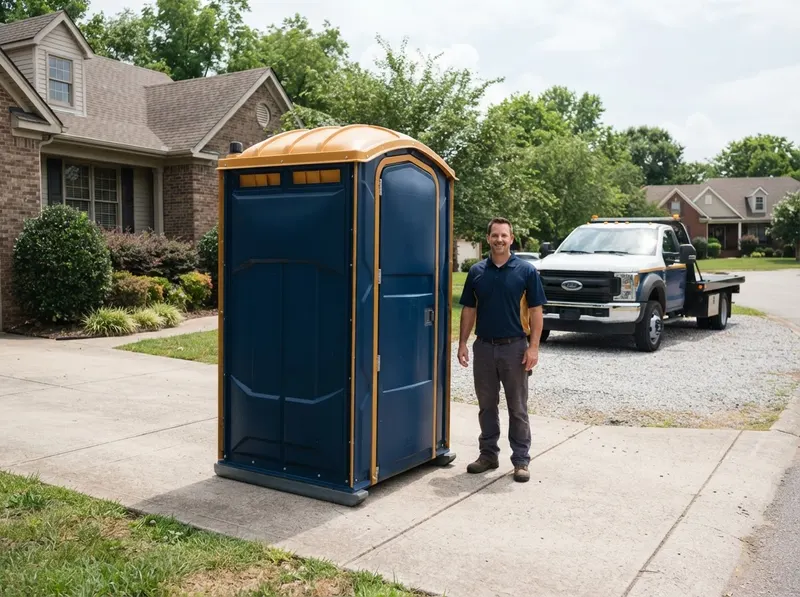
A holding tank sanitation system handles volume beyond the limits of standard self-contained portable toilets by capturing effluent from mobile office trailers, mobile command centers, and temporary kitchen blocks. For general contractors running multi-month commercial developments along Division Street in The Gulch or historic restorations in Germantown, an under-trailer holding tank eliminates the need for daily waste servicing while maintaining clean, plumbed indoor restrooms for field staff. Unlike standard chemical cabins that require internal footprint space, low-profile 250-gallon waste reservoirs slide directly beneath mobile structures with a vertical clearance profile under 18 inches, connecting cleanly through standard 3-inch or 4-inch rubber coupling boots. The operational trade-off centers on placement logistics: holding tanks require level ground contact and unrestricted access routes for large vacuum pump trucks, meaning installations along tight alleys in East Nashville or sloped access lanes near Sylvan Park require deliberate positioning before construction framing begins.
Outdoor event production schedules in high-traffic zones, such as load-in zones near Geodis Park, Bicentennial Capitol Mall State Park, or Nissan Stadium, rely on discrete containment networks to manage continuous greywater loads from catering trailers and luxury restroom trailers. A multi-basin containment system ensures grease-free dishwashing discharge and high-volume handwash water remain safely captured without pooling on public turf or violating local municipal runoff codes. For extended film productions, corporate hospitality tents around the Grand Ole Opry, and multi-tier utility projects in Donelson, Bellevue, and Antioch, standard weekly vacuum pump-out cycles prevent airlocks and sensor overflows. Every pump-out cycle vacuums the full basin, extracts internal settled particulates, replenishes industrial masking agents, and transports effluent directly to certified treatment facilities in accordance with Davidson County sanitary mandates. Site planners who opt for holding tanks over standalone portable units trade slightly higher setup requirements for standard indoor plumbing convenience, continuous odor isolation, and high-volume surge tolerance during peak project shifts.
Every job gets a firm, written price after a free on-site visit.
Tell us about your holding tank sanitation system job in Nashville and we'll send a clear, written quote, usually the same day.
 Canyon Hawk Portable Toilets